(+254) 794 864 438

MFC-ICLIP Partnership
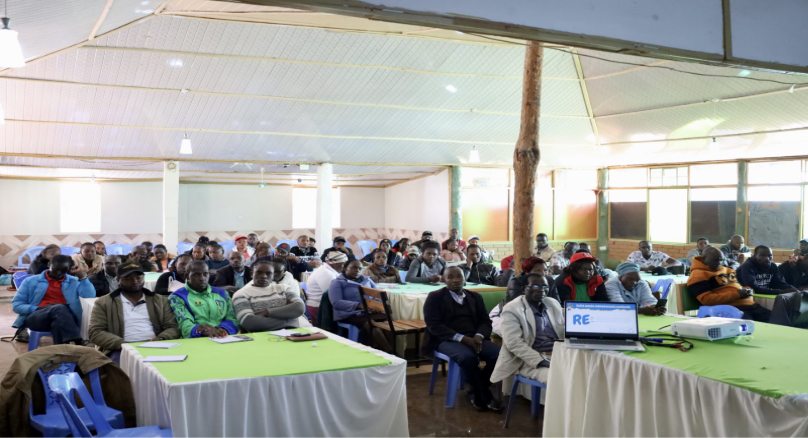
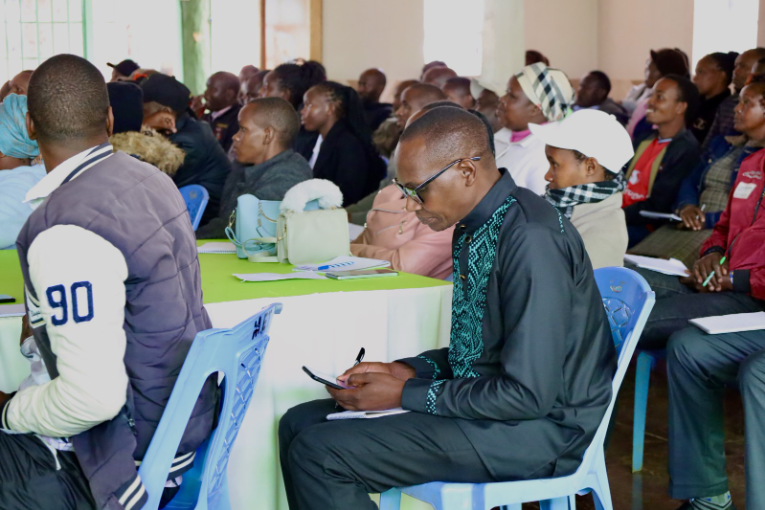
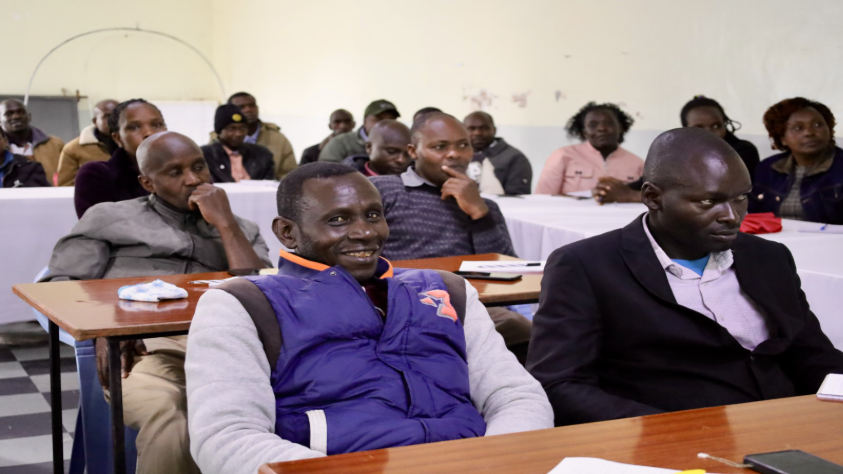
There is something quietly powerful about a room full of teachers who have just been handed a new way of seeing the world. Last week from 28th to 31st July 2026 in Molo, that is exactly what happened. PAKPRO, as the Official Circular Economy Partner in the MFC-ICLIP (Mau Forest Complex Integrated Conservation and Livelihoods in Progress) program, brought together over 300 Environment Education teachers from across the MAU region for a four-day training on Integrated Waste Management. What unfolded over those days was more than a knowledge exchange; it was the beginning of a ripple effect. And ripples, in the right ecosystem, become waves.
A Different Conversation About Waste
The circular economy asks us to rethink one of the most fundamental assumptions we hold: that waste is the end of something.
It is not. Waste is a beginning of compost, new materials, income, cleaner communities, and healthier environments. The moment people genuinely internalise this shift, their relationship with what they throw away changes entirely. And when that shift happens inside a teacher, it travels.
This is the insight that drives PAKPRO’s approach within the MFC-ICLIP Circular Economy Pillar. We are not simply running training; we are building a network of informed, inspired educators who carry the principles of responsible waste management back to their schools, their communities, and the next generation in and around the MAU Forest Complex.
What We Built Together in Molo
The training covered Integrated Waste Management in its fullest sense both as an environmental discipline and as a community opportunity. Teachers deepened their understanding of where waste comes from and the real effects it has on soil, water, air, and human health knowledge that transforms abstract environmental concern into grounded, local awareness. They explored solid waste management methods anchored in the globally recognised 4Rs: reduce, reuse, recover, and recycle which are simple principles with profound community applications.
Participants engaged practically with waste separation systems, learning how colour-coded bins can make a meaningful difference at the point of disposal, an approach replicable in schools across the region with minimal resources. They examined the specific dangers of hazardous waste including batteries, chemicals, medical materials and gained the confidence to communicate those risks clearly and compellingly with their students.
Perhaps most energising was the session on waste as a business opportunity. Discarded materials, seen through the lens of the circular economy, become raw inputs for products with real market value. For communities in the MAU region, this is not a distant possibility it is an accessible, immediate pathway to both environmental stewardship and economic empowerment.
The Multiplier Effect Is the Strategy
PAKPRO’s work is built on a conviction, that the most durable environmental change is the kind that communities own, understand, and choose not the kind imposed from outside.
Investing in Environment Education teachers is one of the clearest expressions of that conviction. A teacher who understands the circular economy deeply does not just pass on information, they inspire curiosity, model critical thinking, and create space for young people to imagine a different relationship with the world around them. Multiply that across classrooms, across schools, across the MAU region, and you begin to see the shape of systemic change.
This is impact that compounds. Over 300 teachers trained is not just a number, it is over 300 classrooms reached, over 300 communities with a newly informed voice on waste, environment, and opportunity. Each training is a seed. Each teacher is a grower. And the MAU one of Kenya’s most vital water towers, an ecosystem whose health affects millions is the ground we are all tending together.
Looking Forward
The work does not stop in Molo. PAKPRO remains committed to walking alongside these teachers as they put learning into practice supporting schools to establish waste segregation systems, helping communities explore waste-to-value enterprises, and continuing to build the human infrastructure that makes lasting environmental change possible.
The circular economy is not a future aspiration for the MAU region. It is already being built with one informed teacher, engaged classroom and converted community at a time.
We are proud to be part of it.
PAKPRO supports the Circular Economy Pillar of the MFC-ICLIP program through sustainable waste management infrastructure systems, capacity building, environmental education, and community-rooted behaviour change across the MAU region.
Follow our journey and join the conversation: