(+254) 794 864 438

MFC-ICLIP Partnership
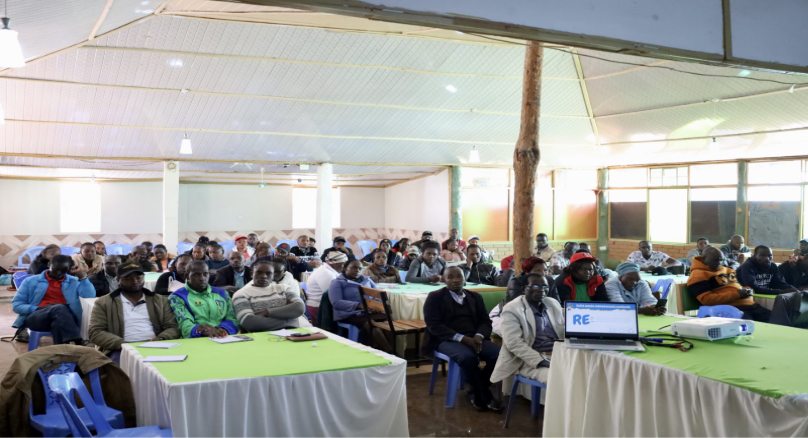
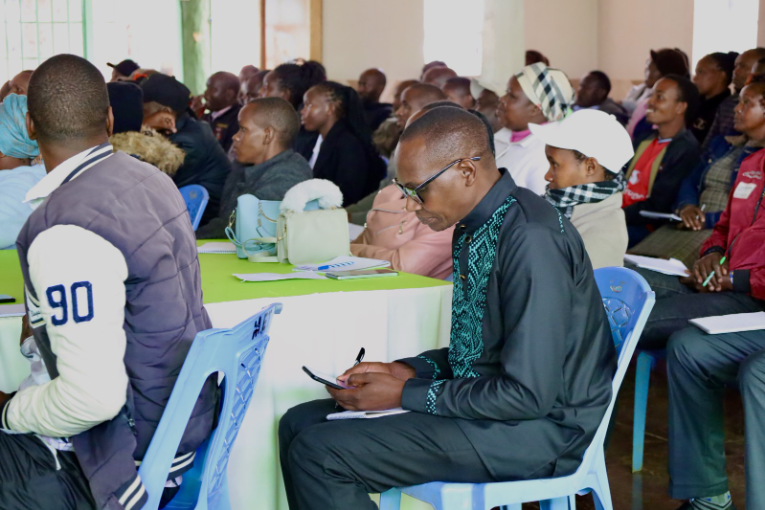
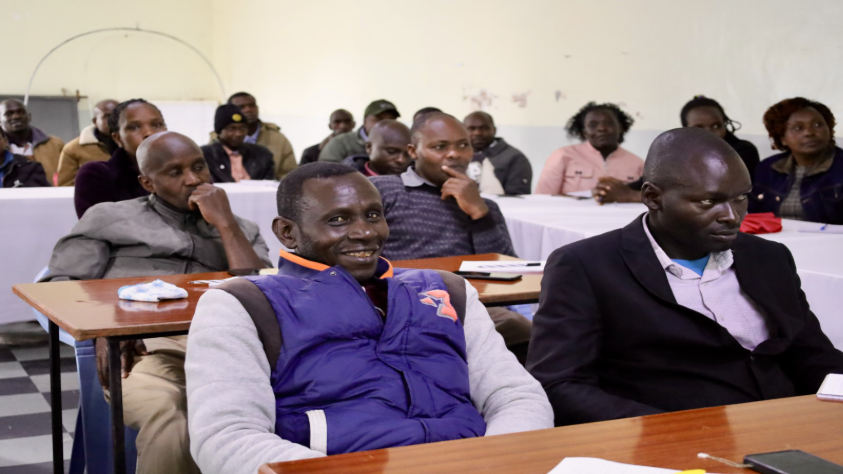
There is something quietly powerful about a room full of teachers who have just been handed a new way of seeing the world. Last week from 28th to 31st July 2026 in Molo, that is exactly what happened. PAKPRO, as the Official Circular Economy Partner in the MFC-ICLIP (Mau Forest Complex Integrated Conservation and Livelihoods in Progress) program, brought together over 300 Environment Education teachers from across the MAU region for a four-day training on Integrated Waste Management. What unfolded over those days was more than a knowledge exchange; it was the beginning of a ripple effect. And ripples, in the right ecosystem, become waves.
A Different Conversation About Waste
The circular economy asks us to rethink one of the most fundamental assumptions we hold: that waste is the end of something.
It is not. Waste is a beginning of compost, new materials, income, cleaner communities, and healthier environments. The moment people genuinely internalise this shift, their relationship with what they throw away changes entirely. And when that shift happens inside a teacher, it travels.
This is the insight that drives PAKPRO’s approach within the MFC-ICLIP Circular Economy Pillar. We are not simply running training; we are building a network of informed, inspired educators who carry the principles of responsible waste management back to their schools, their communities, and the next generation in and around the MAU Forest Complex.
What We Built Together in Molo
The training covered Integrated Waste Management in its fullest sense both as an environmental discipline and as a community opportunity. Teachers deepened their understanding of where waste comes from and the real effects it has on soil, water, air, and human health knowledge that transforms abstract environmental concern into grounded, local awareness. They explored solid waste management methods anchored in the globally recognised 4Rs: reduce, reuse, recover, and recycle which are simple principles with profound community applications.
Participants engaged practically with waste separation systems, learning how colour-coded bins can make a meaningful difference at the point of disposal, an approach replicable in schools across the region with minimal resources. They examined the specific dangers of hazardous waste including batteries, chemicals, medical materials and gained the confidence to communicate those risks clearly and compellingly with their students.
Perhaps most energising was the session on waste as a business opportunity. Discarded materials, seen through the lens of the circular economy, become raw inputs for products with real market value. For communities in the MAU region, this is not a distant possibility it is an accessible, immediate pathway to both environmental stewardship and economic empowerment.
The Multiplier Effect Is the Strategy
PAKPRO’s work is built on a conviction, that the most durable environmental change is the kind that communities own, understand, and choose not the kind imposed from outside.
Investing in Environment Education teachers is one of the clearest expressions of that conviction. A teacher who understands the circular economy deeply does not just pass on information, they inspire curiosity, model critical thinking, and create space for young people to imagine a different relationship with the world around them. Multiply that across classrooms, across schools, across the MAU region, and you begin to see the shape of systemic change.
This is impact that compounds. Over 300 teachers trained is not just a number, it is over 300 classrooms reached, over 300 communities with a newly informed voice on waste, environment, and opportunity. Each training is a seed. Each teacher is a grower. And the MAU one of Kenya’s most vital water towers, an ecosystem whose health affects millions is the ground we are all tending together.
Looking Forward
The work does not stop in Molo. PAKPRO remains committed to walking alongside these teachers as they put learning into practice supporting schools to establish waste segregation systems, helping communities explore waste-to-value enterprises, and continuing to build the human infrastructure that makes lasting environmental change possible.
The circular economy is not a future aspiration for the MAU region. It is already being built with one informed teacher, engaged classroom and converted community at a time.
We are proud to be part of it.
PAKPRO supports the Circular Economy Pillar of the MFC-ICLIP program through sustainable waste management infrastructure systems, capacity building, environmental education, and community-rooted behaviour change across the MAU region.
Follow our journey and join the conversation:
Written by: PAKPRO Communications
Lessons from the Chobo ball, there was a time when no one used the word “sustainability,” yet we were already practicing it.
Millennials may remember this, long before recycling became policy or packaging became a national conversation, children across Kenya were quietly demonstrating circular economy principles on dusty playgrounds. To jog your memory, they would gather discarded plastic bags, bread wrappers, snack packets and begin a familiar ritual. The plastic was folded tightly into itself, layer upon layer, pressed into shape, then bound carefully with sisal string. It was a perfect balance of using these materials to create either a soft or hard ball. You and your friends debated on what worked best for your ball. What emerged was simple, durable, and deeply symbolic.
No one had to buy it, inflate it, or wait for the perfect pitch. The chobo ball came together with what was already there and what was available was often discarded packaging. What some adults saw as litter, children saw as raw material.
On uneven grounds in estates, villages, and informal settlements, the chobo ball rolled through entire childhoods. It brought joy, ringing laughter, It absorbed ambition. It carried imagination. It survived tackles, gravel, rain, and the fierce loyalty of neighborhood rivalries. For many, it was the first football they ever owned, even if ownership was shared by an entire block.
The chobo ball is not just nostalgia. It is a lesson.
It reminds us that in Kenya, resourcefulness is not imported; it is instinctive. We have always understood, intuitively – that materials have value beyond their first use. The challenge today is not creativity. It is scale.
Our packaging has changed. We now consume more bottled water, more snacks, more household goods wrapped in plastic, cartons, laminates, and woven materials. Packaging protects food, keeps products safe, and supports modern commerce. But once it has served its first purpose, it faces a crossroads.
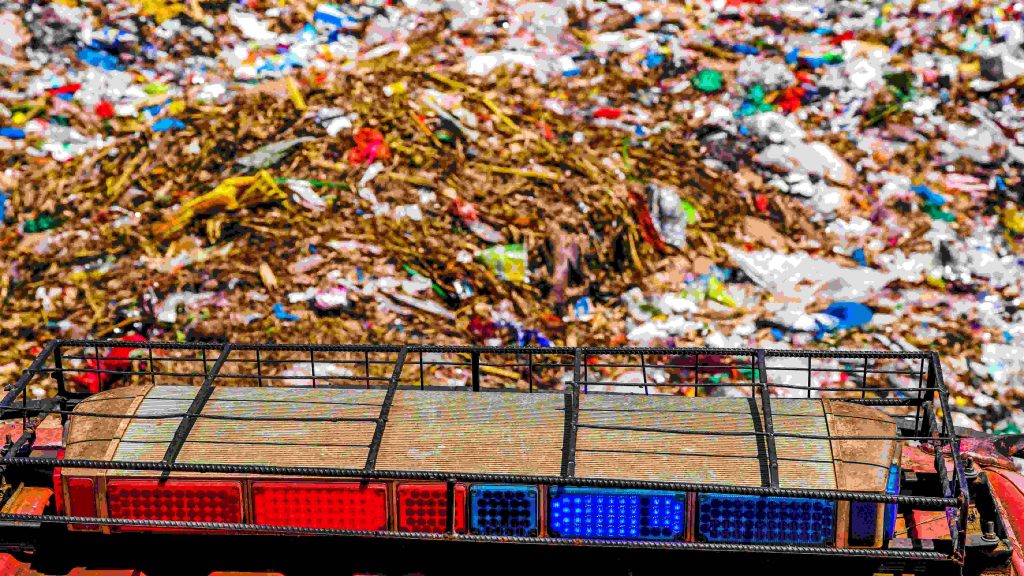
If discarded carelessly, it clogs drains, pollutes rivers, and burdens communities. If collected and sorted, it becomes something else – recycled materials, new products, alternative energy, livelihoods. If thrown away carelessly, it blocks drains, dirties rivers, and affects our communities. But if it is collected and sorted, it can become something useful, new products, energy, even someone’s income. The difference is simple. It depends on having the right systems and on all of us playing our part.
Across the country, thousands of waste pickers, aggregators, and recyclers are building those systems every day. Households are learning to separate materials. Businesses are investing in recovery solutions. What once felt like a nuisance is steadily becoming an economic opportunity.
In many ways, the spirit of the chobo ball is still alive.
It lives in the waste picker who understands the value of a bottle. It lives in the child who does not litter. It lives in the small recycling business that sees possibility where others see inconvenience.
The story of the chobo ball is not about poverty. It is about ingenuity. It is not about scarcity. It is about imagination under constraint. And perhaps most importantly, it is about the quiet truth that value is often hiding in plain sight.
The next time you hold an empty bottle or a snack wrapper, pause for a moment. That material is not at the end of its story. In the right hands, with the right systems, it can begin again.
After all, long before we called it circular economy, we were already playing with it.
Perhaps the spirit of the chobo ball is not just a memory. It is something we can carry with us today. Every bottle or wrapper we finish using still has value. When we choose not to litter, reduce our waste, when we sort our waste, when we use the right bin, we help keep our streets and rivers clean and support the people who earn a living from recycling. A cleaner Kenya begins with small, simple choices – the same practical thinking that once turned discarded packaging into a game that brought us together.
By the PAKPRO Comms Team
Kenya’s ambition for 100% recyclable packaging is bold and necessary. But ambition alone does not deliver results. What truly drives progress is aligning industry responsibility with practical, scalable systems on the ground. This is where PAKPRO stands, as the bridge between policy commitments and real-world impact.
Across Kenya’s packaging value chain, producers are increasingly stepping up to take responsibility for the materials they place on the market. Through Extended Producer Responsibility (EPR), businesses are not only committing to sustainability goals but actively investing in collection, recovery, and recycling systems.
However execution is everything
Reaching 100% recyclability may seem like an advanced goal, but it is achievable. It is not just about designing better packaging, it is about ensuring that every piece of packaging can move through an efficient, inclusive recovery system. That requires strong collaboration across the value chain, investment in recycling infrastructure, inclusion of informal waste collectors, and data-driven accountability. PAKPRO is enabling this ecosystem, translating industry responsibility into measurable outcomes.
Lessons from South Africa: What Works
Recent engagements and learning exchanges proudly sponsored by Tetra Pak, with PETCO, a leading Producer Responsibility Organisation in South Africa, have reinforced a simple but powerful truth: effective EPR systems are built on coordination, compliance, and trust. With a total of 82 PROs in South Africa representative of the population and waste demands. South Africa’s progress demonstrates offers a glimpse of what that looks like in practice. Their progress shows that clear regulatory frameworks give industry the certainty to participate, well-structured PROs bring efficiency and accountability, integrating informal waste collectors meaningfully lifts collection rates, and transparent reporting builds the credibility that keeps a system trustworthy. Perhaps the most important lesson is this: success does not come from isolated efforts, but from a unified system in which every actor understands their role and plays it well.
Perhaps most importantly, their model shows that success lies not in isolated efforts but in a unified system where every actor understands their role and delivers it. This came into sharp focus as PAKPRO engaged with pioneering South African recyclers, converters, and manufacturers driving innovation in the circular economy using 100% recycled plastic and PolyAl material to manufacture patio sets, picnic tables, playground equipment, and custom-made products.
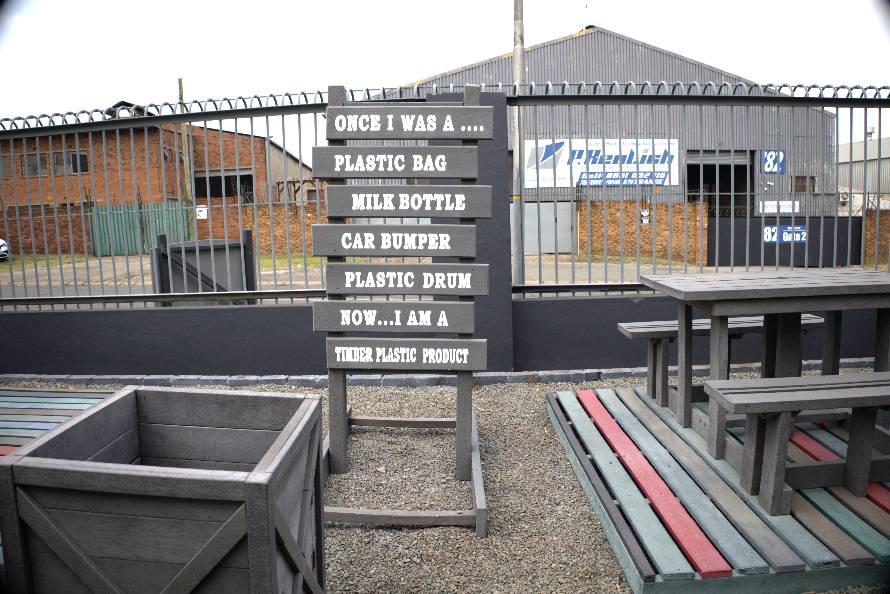
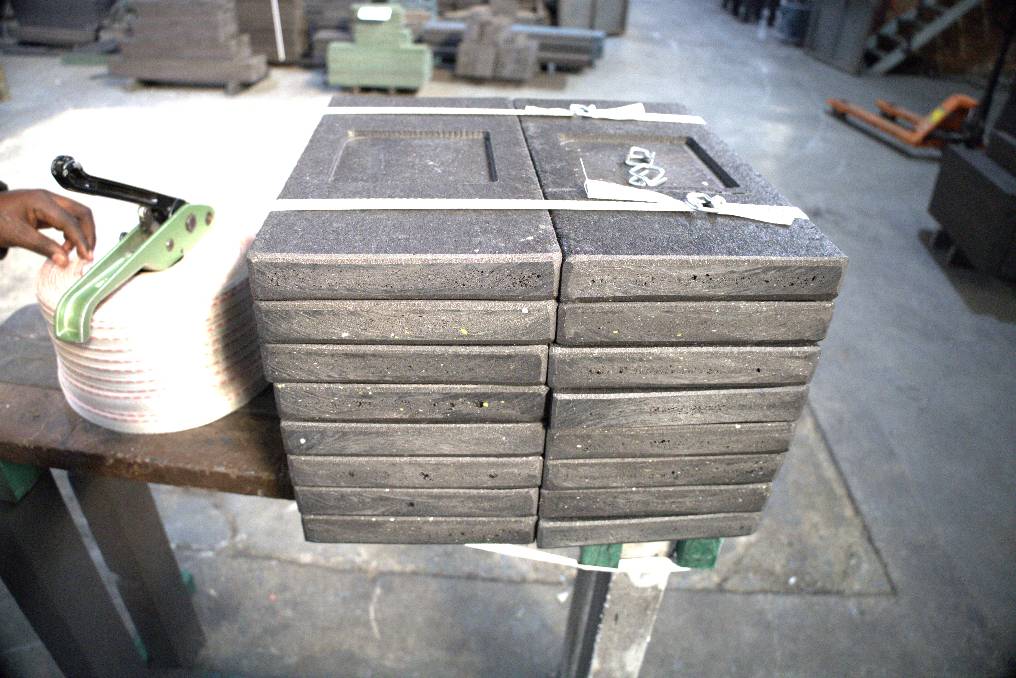
Kenya is not starting from scratch. We have a vibrant recycling sector, Strong policy direction under EPR regulations and increasing private sector commitment. What we need now is scale, coordination, and consistency. PAKPRO is playing a central role in supporting producers meet their EPR business obligations efficiently while collectively pushing for waste collection systems to be strengthened and expanded to ensure recyclers are supported with consistent material flows. Finally, using technology for data and reporting framework guide to progress toward national targets.
Moving Forward Together
Reaching 100% recyclable packaging by 2030 is not just about possibility, it is about systems that work. PAKPRO connects policy and implementation, producers and recyclers, formal and informal sectors, turning commitments into measurable outcomes. By doing so, we are not only advancing compliance, but also building a circular economy that delivers environmental, social, and economic value. The insights from South Africa reaffirm that with the right structures, partnerships, and accountability mechanisms, transformation is achievable. At PAKPRO, we are committed to ensuring that industry responsibility translates into real impact closing the loop on packaging and shaping a more sustainable future for Kenya.
For more information and to arrange interviews, please contact: corporatecomms@pakpro.co.ke